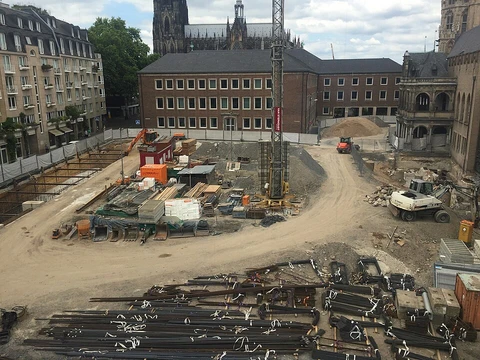
Cement
Binder that sets, hardens, and binds other materials together.

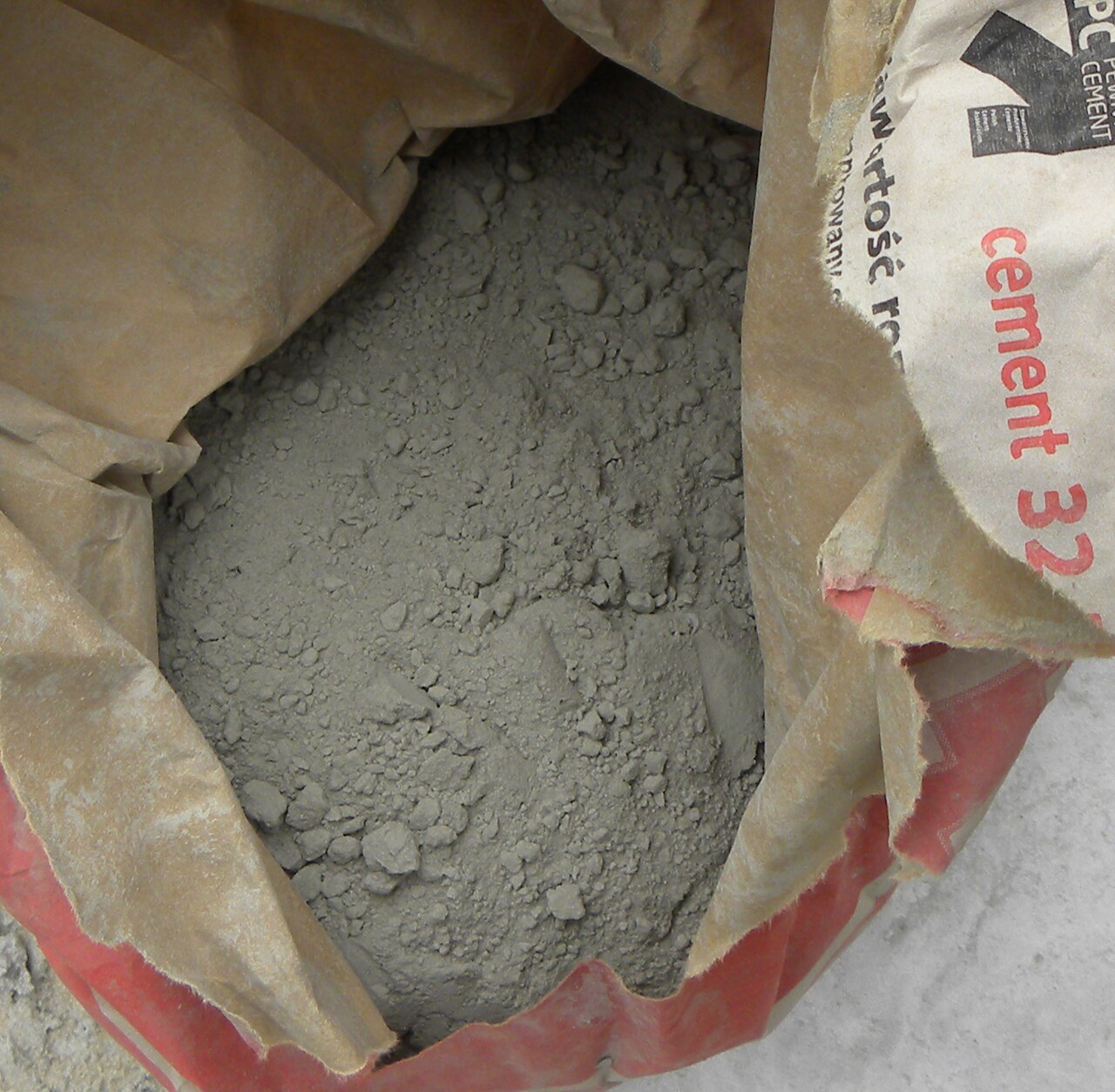
Nnnjens · CC0
Cement is a binder used for construction that sets, hardens, and adheres to other materials to bind them together. It is seldom used on its own, but rather to bind sand and gravel (aggregate) together. Cement mixed with fine aggregate produces mortar for masonry, or with sand and gravel, produces concrete. Concrete is the most widely used material in existence and is behind only water as the planet's most-consumed resource. Cements used in construction are usually inorganic, often lime- or calcium silicate-based, and are either hydraulic or less commonly non-hydraulic.
- field
- Construction materials
- known_for
- Binding agent in concrete, the most widely used material after water
- annual_production
- About 4.4 billion tonnes (2021 estimate)
- top_producer
- China (about half of world production)
- co2_emissions_share
- Nearly 8% of global CO2 emissions (2018)
- carbonation_reabsorption
- Approximately 30% of initial CO2 emissions reabsorbed by hydrated products
Lore & Background
The word 'cement' traces back to the Ancient Roman term opus caementicium, describing masonry made from crushed rock with burnt lime as binder. Volcanic ash and pulverized brick added to burnt lime for hydraulic binder were later called cementum, cimentum, cäment, and cement. The earliest known occurrence of cement is from twelve million years ago, formed after oil shale adjacent to limestone burned by natural causes. Ancient Romans used volcanic ash (pozzolana) with added lime to create hydraulic cement that could set under water. The Greeks used volcanic tuff from the island of Thera as pozzolan, and Romans used crushed volcanic ash from Pozzuoli. In the absence of pozzolanic ash, Romans used powdered brick or pottery. The huge dome of the Pantheon and the Baths of Caracalla are examples of ancient structures made from these concretes.
Reader's Guide
Cement is fundamental to modern construction, serving as the binding agent in concrete, the most consumed material on Earth after water. Its significance lies in its versatility: hydraulic cements like Portland cement set through chemical reactions with water, allowing use in wet conditions and underwater, while non-hydraulic cements set by reacting with carbon dioxide in air. The production process, however, carries substantial environmental impact, responsible for nearly 8% of global CO2 emissions in 2018, primarily from calcination of limestone and fuel combustion. Notably, concrete gradually reabsorbs about 30% of these emissions through carbonation. The chemistry involves four main mineral phases: alite, belite, tricalcium aluminate, and calcium aluminoferrite. Historically, Roman engineers demonstrated the durability of hydraulic cement in structures still standing today. Modern production exceeds 4.4 billion tonnes annually, with China producing about half. The material's legacy includes both ancient Roman engineering and contemporary global infrastructure, though its environmental footprint remains a challenge.
Did You Know?
- Concrete is the most widely used material in existence, behind only water as the planet's most-consumed resource.
- The earliest known occurrence of cement is from twelve million years ago, formed by natural burning of oil shale adjacent to limestone.
- The word 'cement' comes from the Ancient Roman term opus caementicium.
- Hydrated products of cement, such as concrete, gradually reabsorb atmospheric CO2, compensating for approximately 30% of initial CO2 emissions.
Gallery
Frequently Asked Questions
Who is Cement?
Cement is an inorganic binding agent—typically lime- or calcium-silicate based—that hardens over time and glues other materials into a single solid mass. It almost never works alone; instead, it serves as the glue that locks sand, gravel, and other aggregates into a unified structure.
What are Cement's powers/role?
Its core ability is to set, harden, and create an adhesive bond that fuses separate particles into one cohesive unit. When paired with fine aggregate it becomes mortar for brickwork, and when combined with sand and gravel it becomes concrete—the single most-produced material on Earth after water.
How does Cement's story end?
Rather than a dramatic finale, Cement's life concludes through a slow chemical process called carbonation, during which its hydrated products gradually reabsorb roughly 30% of the CO₂ originally released when it was manufactured. In this way, its 'ending' partially offsets the environmental cost of its creation.
Why is Cement important?
It underpins the most widely used material in human history—concrete—making it foundational to virtually every modern structure, road, and infrastructure project. Global output sits at roughly 4.4 billion tonnes per year, with China alone accounting for about half of that total.
What's Cement's biggest controversy?
The production process is responsible for nearly 8% of all global CO₂ emissions, making it one of the single largest industrial sources of greenhouse gas release. This has driven ongoing research into low-carbon alternatives and supplementary cementitious materials.
More in Construction & Materials 1-19
Spotted an error? Know more?
This is a living reference — every entry is fact-audited, and reader corrections feed straight into our audit queue. Suggest an edit · See this site's audit record