
Chisel
A wedge-shaped tool for carving or cutting hard materials.

Wikimedia Commons · CC0
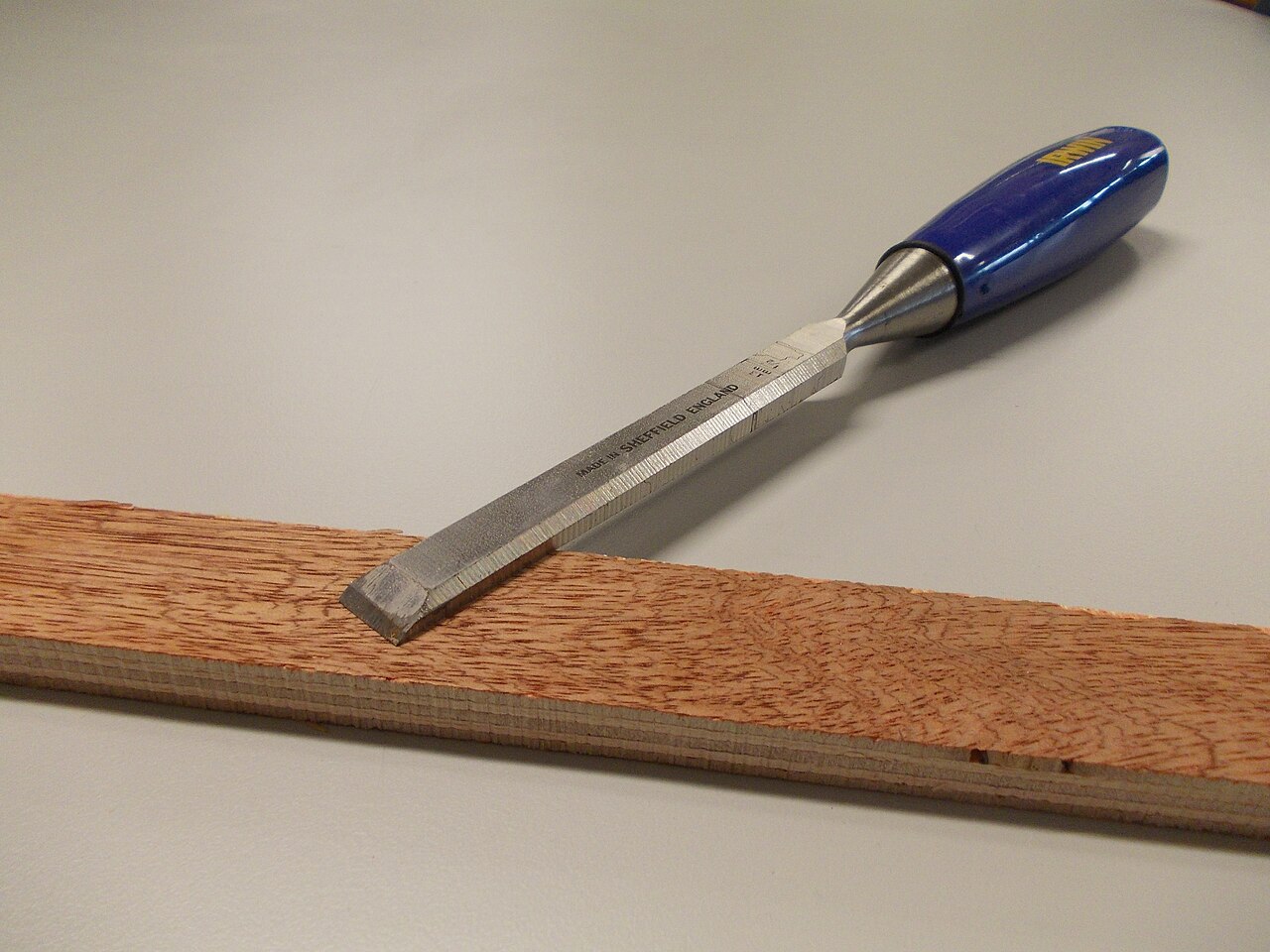
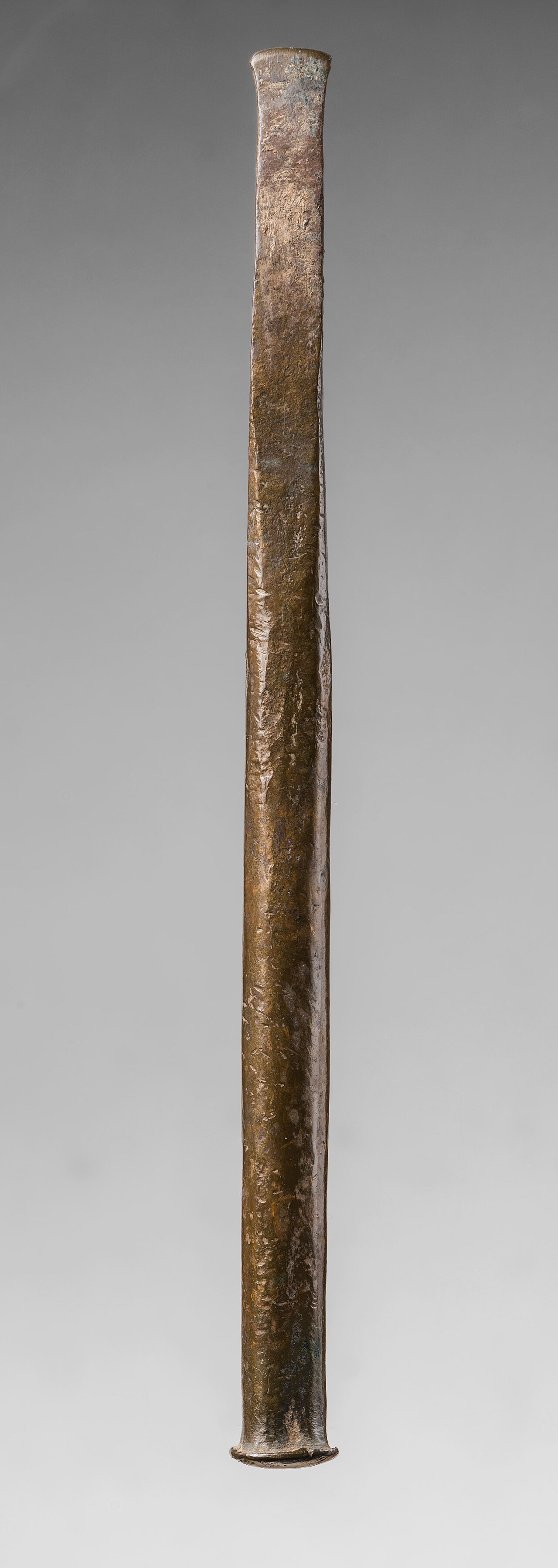
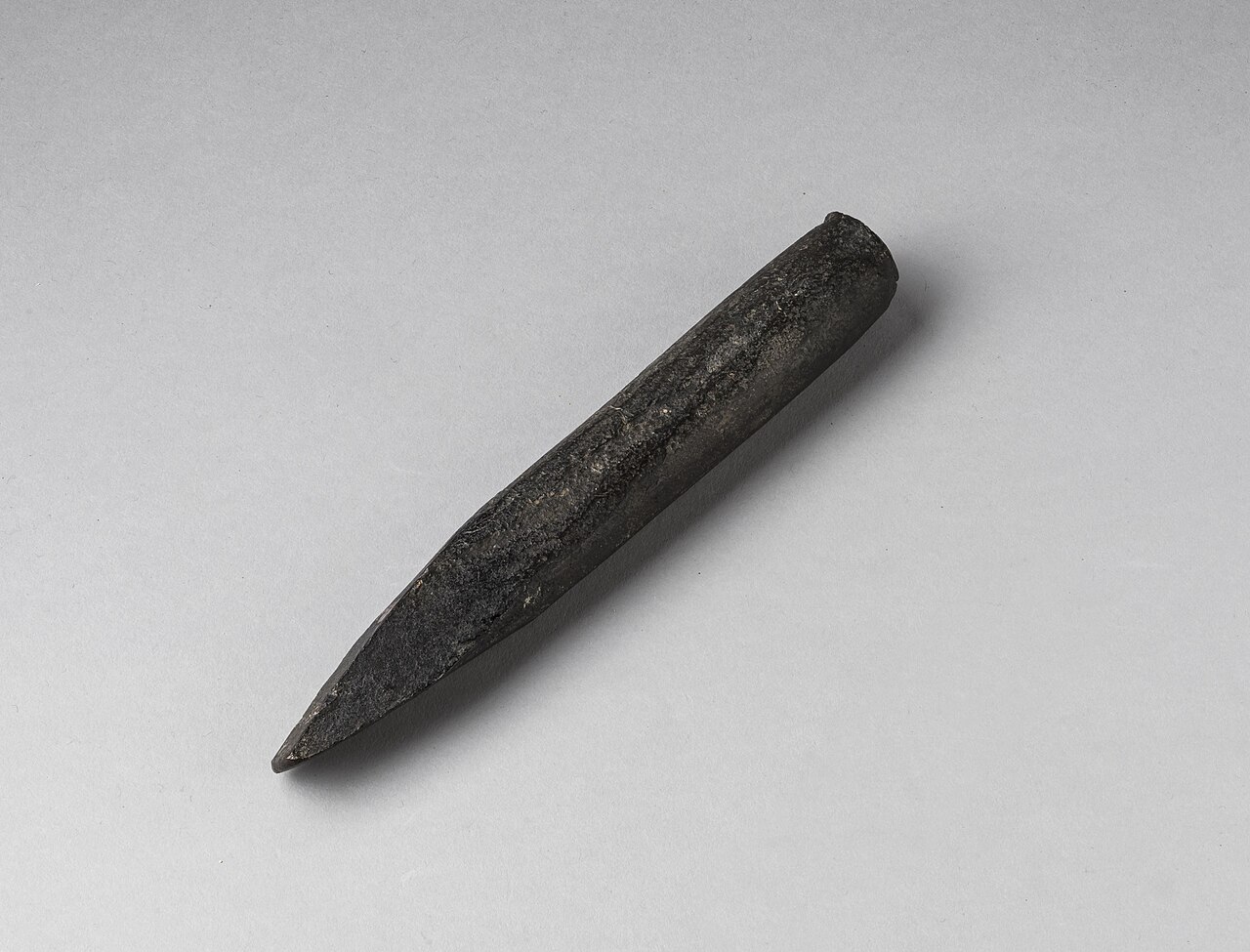
A chisel is a hand tool with a characteristic wedge-shaped cutting edge on the end of its blade, used for carving or cutting hard materials such as wood, stone, or metal. The tool is driven by hand, mallet, hammer, or in industrial use by a hydraulic ram or falling weight. A gouge is a type of chisel with a curved or angled blade, used in woodworking, woodturning, and sculpture.
- field
- Hand tools
- known_for
- Carving and cutting hard materials with a wedge-shaped blade
- types
- Woodworking, metalworking, stone, masonry, leather, and gouge chisels
Lore & Background
Woodworking chisels range from small detail tools to large slicks used in timber framing and shipbuilding. Types include firmer, bevel edge, mortise, paring, skew, dovetail, butt, carving, corner, flooring, framing, slick, and drawer lock chisels. In woodturning, chisels and gouges have longer handles for leverage against spinning wood. Metalworking chisels are divided into hot and cold chisels; cold chisels are tempered steel used on unheated metal, with types including flat, cross cut, round nose, and diamond point. Stone chisels are used for carving or cutting stone, bricks, or concrete, with a brick bolster for cutting and a spoon chisel for sculpting. Masonry chisels are heavy, with a dull head for wedging and breaking, and include moil, flat, asphalt cutters, carbide bushing tools, clay spade, flexible chisels, tamper, and plugging chisels. Leather chisels punch holes with one to seven tines for stitching. Gouges are specified by sweep number and width, with variations like crank-neck, spoon-bent, and fishtail.
Reader's Guide
The chisel is a fundamental tool across multiple crafts and industries, from fine woodcarving to heavy masonry demolition. Its design—a wedge-shaped blade driven by force—has remained consistent for centuries, adapted only in size, material, and specific edge geometry for different materials. Woodworking chisels allow for precise shaping and joinery, while cold chisels enable metal cutting without heat. Stone and masonry chisels facilitate construction and sculpting in hard materials. The gouge, a specialized chisel with a curved blade, is essential in woodturning and sculpture. The tool's versatility is reflected in the many specialized types, each engineered for a particular task, such as the mortise chisel for joints or the slick for large timber work. The chisel's legacy lies in its simplicity and adaptability, remaining a core tool in both traditional handcraft and modern industrial settings.
Did You Know?
- A gouge is a type of chisel with a curved or angled blade, used in woodworking, woodturning, and sculpture.
- Cold chisels are made of tempered steel and are used to cut 'cold' metals without heating.
- A slick is a very large chisel driven by manual pressure, never struck.
- In leather work, a chisel is used to punch holes with between one and seven tines.
The Wedge Principle and Applied Force
A chisel is, at its core, a wedge-shaped blade engineered to penetrate and separate hard materials such as wood, stone, or metal. Every use of the tool revolves around one action: driving the cutting edge into the workpiece. How that driving force is delivered shapes the entire experience. At the most basic level, a craftsman simply pushes the blade by hand, applying steady pressure to part the material. For heavier work, a mallet or hammer transfers a sharper impulse through the steel. In industrial contexts the scale leaps dramatically, with a hydraulic ram or a falling weight called a trip hammer delivering far more impact than any person could generate. This continuum, from a fingertip nudge to machine-driven force, shows how a single geometric idea, the tapering wedge, scales across every tier of fabrication. The blade's specific proportions, its taper, bevel, and thickness, ultimately govern how much of that incoming force becomes a clean severing cut rather than a blunt crush.
The Woodworker's Arsenal
Woodworking chisels form one of the broadest tool families in any craft. The range stretches from tiny detail blades to the slick, a very large chisel driven purely by manual body pressure in timber frame construction and wooden shipbuilding. A carver typically begins with a larger tool to rough out a form, then steps down through progressively smaller blades to refine the surface and capture fine detail. Within this family each variant solves a distinct problem. A firmer chisel offers a thick rectangular cross section for tougher, heavier work. A bevel edge chisel reaches into acute angles. A mortise chisel, with its rigid slightly tapered blade, cuts joints. A paring chisel's long blade slides into tight grooves. A skew chisel, set at sixty degrees, trims across the grain on a lathe. A dovetail chisel is shaped specifically for its namesake joint. A corner chisel mimics a punch with an L-shaped edge for square holes. A flooring chisel lifts tongue-and-groove boards for repair. Carving chisels alone branch into gouges, V-grooves, parting tools, and more, each with its own cutting profile.
Splitting Metal: Cold and Hot
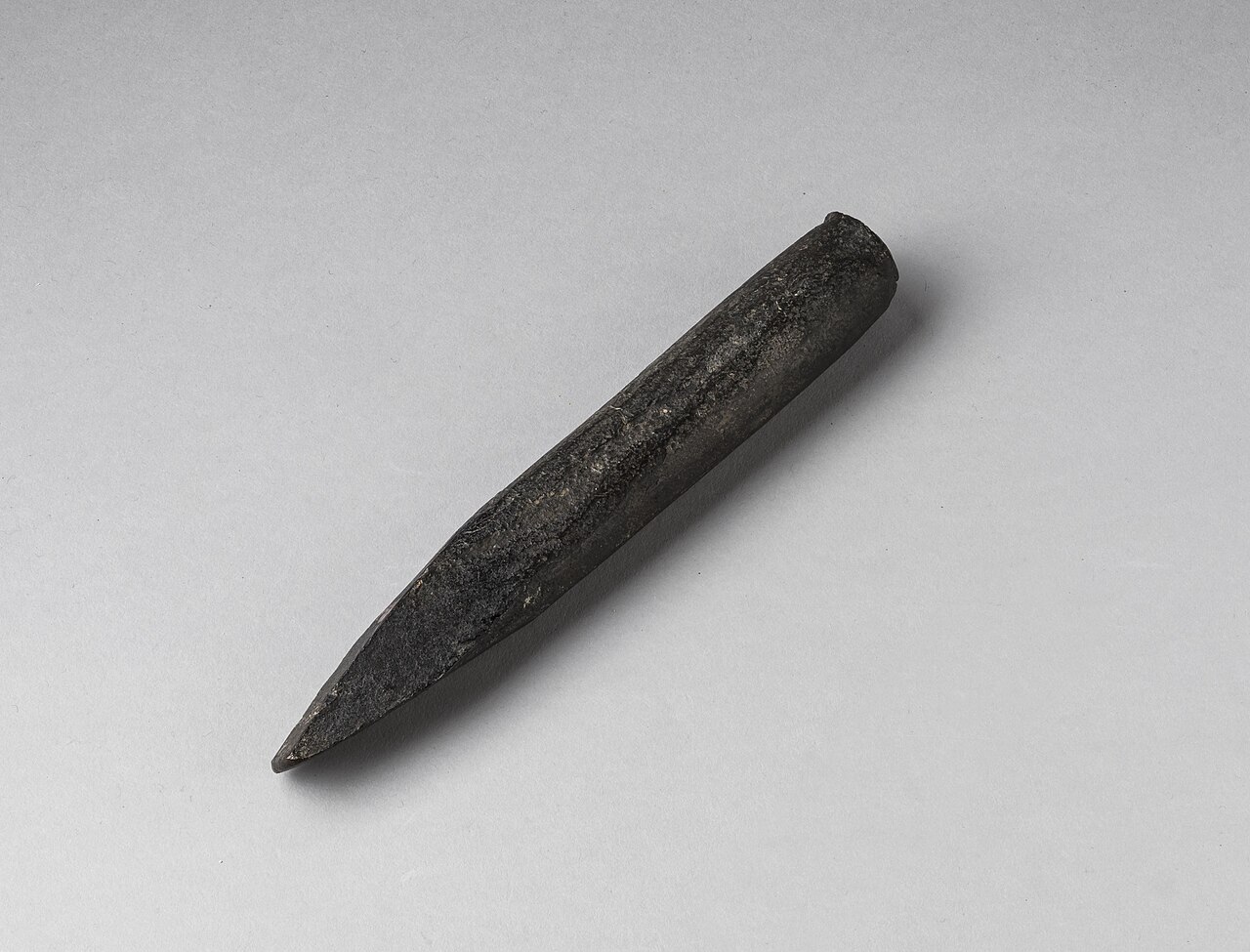
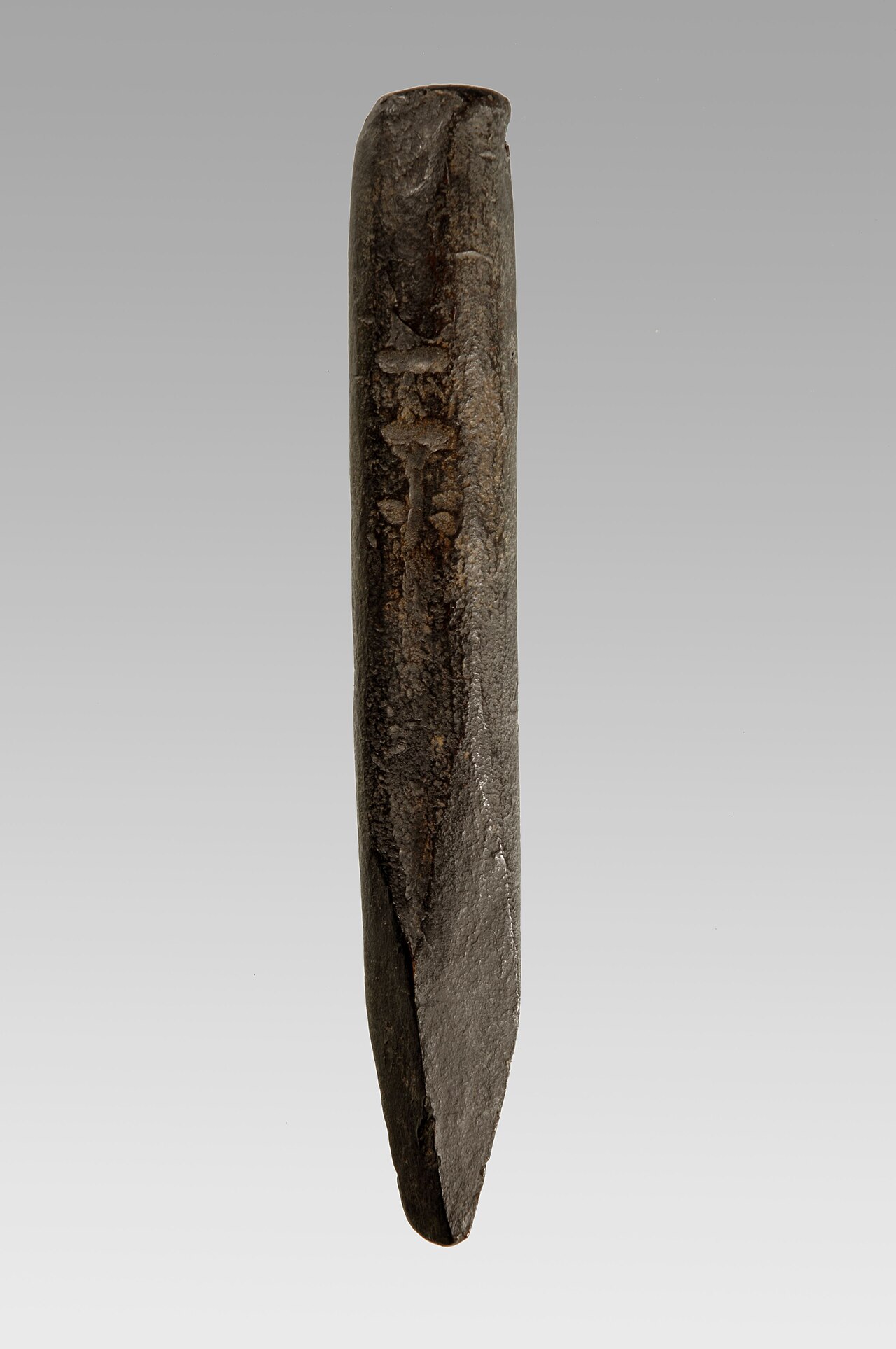
Metalworking chisels split into two philosophies depending on whether the workpiece has been heated. Cold chisels, made of tempered steel and hardened to a blue tint at the edge, tackle unheated metal where a hacksaw, file, bench shears, or power tool cannot easily reach. Their cutting angle is less acute than a wood chisel's, trading sharpness for edge strength. The head is chamfered to slow mushrooming from repeated strikes and deliberately left soft to prevent brittle splintering. Four common forms exist: the flat chisel for bars, rods, and thick sheet; the cross cut chisel with a narrowed rear for grooves and slots; the round nose chisel for semi-circular bearing oil ways; and the diamond point chisel for corners and correcting misplaced center punches. A small number are made from beryllium copper for non-sparking environments. Hot chisels, by contrast, work with forge-softened metal. The hotcut hardy sits in an anvil's hardy hole with its edge facing up; the glowing workpiece is placed over it and struck with a hammer until it snaps, then pulled free with tongs.
Breaking Stone and Masonry
Stone and masonry chisels operate on a fundamentally different principle than their wood or metal counterparts: rather than slicing, they wedge and fracture. A brick bolster, with its wide flat blade, is tapped along a marked line to score a groove, then struck hard at the center to split the brick or slab cleanly. Sculptors working in stone favor a spoon chisel, a bent tool with bevels on both sides, and often rely on club hammers, substantially heavier than standard hammers, to multiply the impact. In masonry and demolition the chisel becomes a blunt instrument of breaking. These tools are typically heavy, with a relatively dull head designed to shatter rather than shear. They can be driven by a hand hammer of three pounds or more, mounted on a hammer drill, or attached to a jackhammer via an SDS, SDS-MAX, or 1-1/8-inch hex shank. The family includes moil or point chisels for splitting, flat chisels for planing surfaces, asphalt cutters, carbide bushing tools, clay spades, and flexible variants suited to irregular work.
Gallery
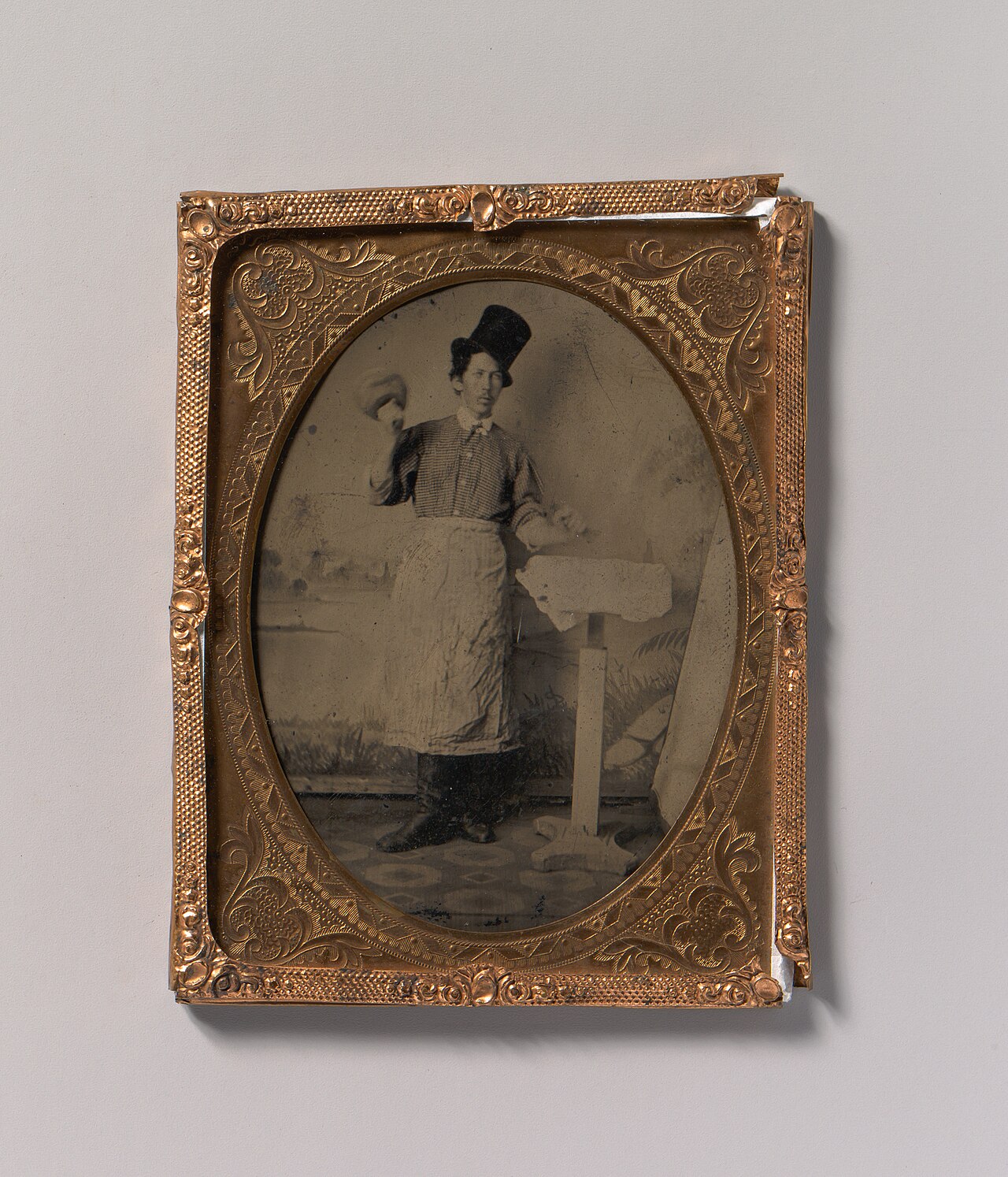
Frequently Asked Questions
What is a chisel?
A chisel is a hand tool whose blade ends in a distinctive wedge-shaped cutting edge. It is designed for carving or slicing through tough substances like wood, stone, and metal.
What types of chisels exist?
Common varieties span woodworking, metalworking, stone, masonry, and leather applications. A gouge is a specialized subtype that replaces the flat edge with a curved or angled blade for scooping work.
How does a chisel differ from a gouge?
A standard chisel presents a straight, flat cutting edge, while a gouge has a curved or angled blade. That curvature lets a gouge carve concave shapes in woodturning and sculpture tasks where a flat chisel would struggle.
What materials can a chisel cut or carve?
Chisels are built to work hard substances including wood, stone, and metal. The specific chisel type you pick is matched to the material's hardness and the finish you need.
How is a chisel driven in practice?
You can strike it with your hand, a mallet, or a hammer for most shop work. In industrial or heavy-duty settings, a hydraulic ram or a falling weight delivers the driving force instead.
More in Construction & Materials 1-19
Spotted an error? Know more?
This is a living reference — every entry is fact-audited, and reader corrections feed straight into our audit queue. Suggest an edit · See this site's audit record